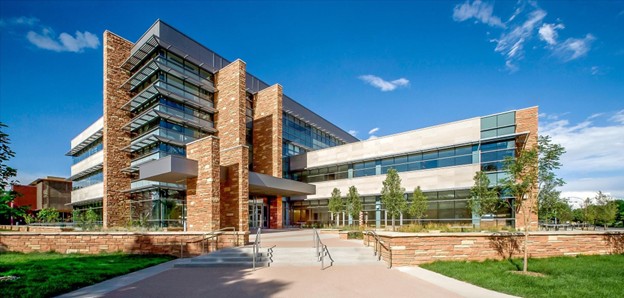
The Graduate Program in Clinical Psychology at Colorado State University has full accreditation from the American Psychological Association. (Commission on Accreditation, American Psychological Association, 750 First Street, NE, Washington DC 20002-424 ,(202) 336-5979).
This program is accredited by PCSAS (Psychological Clinical Science Accreditation System) through 2033. Contact information: Laura Namy, Ph.D., Executive Director; 818 18th St NW, Ste 810-1237, Washington DC 20006; Laura.Namy@pcsas.org; 771-241-5099.
Clinical Psychology
The Graduate Program in Clinical Psychology at Colorado State University is based upon a clinical scientist model of training. The psychological clinical scientist model is predicated on the reciprocal integration of research and clinical practice so that each is informing the other to advance clinical science. As such, the goal of the program is to matriculate students who are capable of advancing psychology as a science and who are proficient in the use of a variety of clinical techniques.
Program Goals
The primary goal of the Program is to train future clinical scientists. This goal is accomplished by providing education through academic coursework, research training through coursework and the advisor-advisee relationship, and clinical training through completion of internal and external clinical practica. Academic courses in the core curriculum provide a conceptual foundation of education in research, foundational knowledge across disciplines within psychology, clinical research and phenomena, and the developmental of skills in clinical assessment and intervention. Students are expected to become competent contributors to psychological clinical science and to develop critical thinking skills as research consumers.
Research Training
Research involvement is required at both the master’s and doctoral levels and encouraged throughout the program. Students are encouraged to join faculty in ongoing research endeavors, which cover a wide range of both applied and theoretical interests, and are expected to develop their own independent research programs. Formal coursework bolsters the research experience. As such, students complete courses in basic and advanced statistical methods, broader research methods, and measurement. Students are expected to present independent research at local, regional, national and international conferences and to publish their work in scholarly journals.
Clinical Training
Clinical training begins during the first year of the program with formal coursework, continues throughout a student’s time on campus through completion of multiple clinical practica, and culminates with the completion of a yearlong predoctoral internship. Internal practica experiences are supervised by licensed professionals, many of whom are faculty in the Psychological Clinical Science program. Internal training follows a generalist approach, providing breadth of training. Students are able to complete external practica in Fort Collins, Denver, and the surrounding areas. This external training provides students the opportunity to gain depth of training working with specific populations, in specific areas, and with specific modalities. All of this prepares students for the clinical internship year and clinical practice after graduation.
Residency
The program requires the equivalent of 5 full-time academic years of graduate study and the completion of an internship prior to the awarding of the doctoral degree. At least 2 of the academic training years within the program must be in full-time residence at CSU. An exception to the 5 years occurs when students request credit to be transferred or waived for coursework from a previous graduate institution. However, students who transfer or waive credit are still required to meet the minimum of 3 full-time academic years of graduate study in the program. Some students take longer than 5 years to complete the program. This usually occurs when life circumstances necessitate a different path through the Program. The Program accommodates these circumstances and works with students to ensure successful completion.
We accept applications for only the Fall semester. The application due date is December 1st.
The Clinical Psychology program has suspended use of the GRE in admissions decisions.
Application instructions and links are located here.
2026 Admissions Cycle
Faculty Interested in Taking Students:
Steven Bruce
Silvia Canetto
Bradley Conner
Noah Emery
Reagan Miller-Chagnon
Teresa Vargas
Admissions Process
Applications are due December 1, 2026
Virtual Interviews will be conducted between December 15, 2026 and February 15, 2027
The Open House will be held Monday, January 25th, 2027
| Year 1 | ||
|---|---|---|
| Fall | ||
| PSY 596C | Orientation | 1 |
| PSY 602 A-C | Psychology Foundations | 3 |
| PSY 610/610 | Clinical Skills 1 & 2 | 3 |
| PSY 652 | Methods of Research in Psychology 1 (Statistics) | 4 |
| PSY 720 | Psychopathology | 3 |
| PSY 692C | PSY 610 Lab | 1 |
| Total Units and Hours | 15 | |
| Spring | ||
| PSY 596C | Orientation | 1 |
| PSY 602 D-F | Psychological Foundations | 3 |
| PSY 655 | Research Methods | 3 |
| PSY 653 | Methods of Research in Psychology (Statistics) | 4 |
| PSY 722 | Empirically Supported Treatments | 3 |
| PSY 692C | PSY 722 Lab | 3 |
| Total Units and Hours | 15 |
| Year 2 | ||
|---|---|---|
| Fall | ||
| PSY 670 | Psychodiagnostic Assessment | 3 |
| PSY 675 | Professional Ethics | 3 |
| PSY 686A | Practicum 1 | 3 |
| PSY 699A | Thesis | 1-3 |
| Total Units and Hours | 10-12 | |
| Spring | ||
| PSY 672 | Psychoeducational Assessment | 3 |
| PSY 600K | Measurement | 3 |
| PSY 686A | Practicum 1 | 3 |
| PSY 699A | Methods of Research in Psychology (Statistics) | 1-3 |
| Total Units and Hours | 10-12 |
| Year 3 | ||
|---|---|---|
| Fall | ||
| PSY 775 | Diversity Issues | 3 |
| PSY 786A | Practicum 2 | 3 |
| PSY 786B | Assessment Seminar | 3 |
| PSY 699A/799A | Thesis or Dissertation | 1-3 |
| Total Units and Hours | 10-12 | |
| Spring | ||
| PSY 754 | Multivariate Statistics | 3 |
| PSY 786A | Practicum 2 | 3 |
| PSY 786B | Assessment Seminar | 3 |
| PSY 699A/799A | Thesis or Dissertation | 1-3 |
| Total Units and Hours | 10-12 |
| Year 4 | ||
|---|---|---|
| Fall | ||
| PSY 777 | Supervision | 3 |
| PSY 786E/F | Practicum 3 (E) / External Practicum (F) | 1-3 |
| PSY 799A | Dissertation | 1-3 |
| Total Units and Hours | 5-9 | |
| Spring | ||
| PSY 600C | Neuropsychology | 3 |
| PSY 786E/F | Practicum 3 (E) / External Practicum (F) | 1-3 |
| PSY 786D | Peer Supervision | 3 |
| PSY 799A | Dissertation | 1-3 |
| Total Units and Hours | 8-12 |
| Year 5 | ||
|---|---|---|
| Fall | ||
| PSY 799A | Dissertation | 1-3 |
| PSY 786F | External Practicum | 3 |
| Total Units and Hours | 4-6 | |
| Spring | ||
| PSY 799A | Dissertation | 1-3 |
| PSY 786F | External Practicum | 3 |
| Total Units and Hours | 4-6 |
| Year 6 | ||
|---|---|---|
| Fall | ||
| PSY 787 | Internship | 1 |
| Total Units and Hours | 1 | |
| Spring | ||
| PSY 787 | Internship | 1 |
| Total Units and Hours | 1 |
Substance Use Disorder Identification and Treatment (SUDIT) Certificate
Students in the Clinical Psychology Ph.D. program are eligible to complete a certificate in Substance Use Disorder Identification and Treatment (SUDIT). Students who earn the SUDIT certificate learn the most effective and ethical ways to identify and treat substance use disorders. The SUDIT certificate is beneficial for anyone who plans to work in private practice as they will be certified to effectively treat all substance use disorders, a skill not traditionally taught in most clinical psychology doctoral programs. The SUDIT certificate is also important for anyone who plans to pursue a career as a substance use researcher, as this certificate emphasizes one’s expertise in the field.
Required Courses:
The certificate consists of four courses that can be completed at any point within the 10 years that students are granted to complete their clinical psychology degree.
- Two classes are offered during Fall semesters:
- PSY726: Neuropharmacology
- PSY724: Motivational Interviewing
- Two classes are offered during Spring semesters:
- PSY613: Advanced Addiction Counseling
- PSY710: Advanced Addiction Treatment
Students who are interested in the SUDIT certificate who have already completed one or more of the required courses will be given retroactive credit for these courses after they apply for and are accepted into the certificate track.
How To Apply
- Talk with your faculty advisor to determine if the SUDIT certificate is an appropriate fit for your career goals.
- Complete the application for the certificate on the Graduate School website
- You will be required to submit:
- A statement of purpose
- Your CV or résumé
- Two recommendations
- Pay $60 to submit your application or talk with Dr. Brad Conner to see if this fee can be covered/waived.
- You will be required to submit:
Please reach out to Dr. Brad Conner if you have additional questions about the SUDIT certificate.
We have a number of internal and external practicum experiences:
At Colorado State University
The Psychological Services Center
The Psychological Services Center (PSC) is a community mental health agency affiliated with the Psychology Department of Colorado State University (CSU). The PSC offers therapy and psychological evaluation services for children, adolescents, adults, couples and families to members of the Fort Collins community. The PSC offers a sliding scale of fees that is based on income and the number of individuals dependent on that income. The PSC typically serves clients who are underrepresented in most clinical settings, including those living below the federal poverty line and who are self-report racial and ethnic minority status.
In Fort Collins and Northern Colorado
Child, Adolescent and Young Adult Connections (CAYAC):
CAYAC serves all individuals from the community including those medically underserved covered by Medicaid and CHP+. Medicaid and CHP+ recipients, who qualify due to living at or below the federal poverty line. Additionally, of those reporting demographic information and receiving Medicaid or CHP+ (approximately 64% or recipients report this information in Colorado), 33% self-report minority race or ethnicity.
Platte Valley Youth Services Center
Platte Valley serves detained residents from rural counties (e.g., Logan, Morgan, Yuma, Adams). The majority of committed residents are from families living at or below the federal poverty line and who are disproportionately of racial and ethnic minority status. There are additional opportunities to work with groups at risk of discrimination, particularly in this kind of correctional facility, including sexual and gender minorities. All residents are considered vulnerable population.
Salud Family Health Centers
Salud is a Federally Qualified Health Center (FQHC) operating 13 clinic locations and a mobile unit across Colorado. They provide medical and behavioral health care to low-income, medically underserved populations, migrant and seasonal farmworker populations in Colorado.
Synapse Counseling LLC
Synapse typically serves un- or underinsured individuals, and provide bilingual (Spanish) services.
UCHealth Mountain Crest Behavioral Health Center
Mountain Crest offers mental health assessments and treatment programs for adolescents, adults, senior citizens, and families. Inpatient and outpatient programs are available. Mountain Crest services individuals with private pay insurance, Medicaid and Medicare, and who are uninsured.
In Denver and the Surrounding Area
National Jewish Health
This is a national program, families fly from all over the country. This often provides the opportunity to work with a diverse family compositions (grandparents raising grandchildren; blended families; single parents with support from aunt, etc.) and individuals from rural and urban communities.
University of Colorado –Department of Family Medicine
Practicum therapists work with patients who suffer medical disabilities or have limited abilities due to multiple chronic conditions. A significant proportion of patients self-identify as having an ethnic or racial minority origin and come from have low income. The clinic also serves other vulnerable patients who identify as immigrants, sexual and gender minorities, and individuals belonging to multiple minority groups. Age range of those served is from 0-90+.
University of Colorado Hospital – Neuropsychology Clinic
A high percentage of patients in this clinic are elderly. Many patients have a disability.
VA Medical Center- Denver
The VA serves veterans who are vulnerable at multiple levels, including many who are individuals from diverse and marginalized backgrounds, including those self-reporting minority ethnic and racial origin, low income, underinsured, and individuals who have been disabled as a result of their service.
What is CDSA?
The Clinical Doctoral Student Association (CDSA) is an independent student organization dedicated to cultivating a learning environment that is collaborative, supportive, respectful and professional for all Clinical doctoral student at CSU.
Aims:
- Foster a sense of community and social support in the program
- Advocate for students needs and address concerns within the program and department
- Organize professional development events/seminars
- Facilitate collaboration among students in clinical and research endeavors
Membership:
All CSU Clinical Psychology doctoral student are automatically a member of CDSA. No formal application or interview is required to obtain membership status.
Leadership:
- President
- Vice President
- Secretary
- Events Coordinator
- Beginning Student Representative
- Advanced Student Representative
- Psychology Department Student Representative
CDSA leadership must be comprised of active CSU graduate students in the Clinical Psychology doctoral program. Leadership positions are established for the academic year at the beginning of each Fall semester.
Core Faculty


Associated Faculty


The Clinical Psychology Program has not sent students on internship yet. The first cohort of students started in the fall of 2024.
Students from the previous version of this program, the Counseling Psychology Program, have been placed at the following internship locations:
20-21 Hennepin Healthcare, Minneapolis, MN
20-21 Allina Health – Mental Health & Addiction Services, Fridley, MN
20-21 Denver Health Medical Center, Denver, CO
20-21 Phoenix VA Health Care System, Phoenix, AZ
20-21 University of Puget Sound, Tacoma, WA
20-21 Alpert Medical School of Brown University, Providence, RI (two students matched here)
20-21 Sharp Healthcare, San Diego, CA
20-21 University of Texas at Dallas Student Counseling Center
19-20 University of California at Santa Cruz, Santa Cruz, CA
19-20 Missouri Health Sciences Psychology Consortium, Columbia, MO
19-20 Washington State University, Pullman, WA
19-20 Colorado Mental Health Institute, Pueblo, CO
19-20 SUNY Stony Brook – Counseling Center, Stony Brook, NY (two students matched here)
18-19 VA Boston Healthcare System, Geropsychology, Boston, MA
18-19 Colorado Psychology Internship Consortium (CO-PIC), Denver, CO
18-19 University of Washington, Behavioral Medicine/Neuropsychology, Seattle, WA
17-18 North Florida/South Georgia VA Health System, Geropsychology, Gainesville, FL
17-18 Wellspan Behavioral Health York, PA
17-18 Community Reach Center Commerce City, Commerce City, CO
16-17 Atascadero State Hospital, California Department of State Hospitals, San Francisco, CA
16-17 West Virginia University, Charleston, West Virginia, VA
16-17 University of Missouri, Counseling Center, Columbia, MI
16-17 Southwest Consortium/NMVAHCS, Albuquerque, NM
16-17 University of Colorado School of Medicine, Primary Care Internship, Denver, CO
15-16 The Ohio State University, Counseling Center, Columbus, OH
14-15 Casa Pacifica in Camarillo, CA
14-15 University of Illinois-Chicago Counseling Center in Chicago, IL
14-15 University of Nebraska Medical Center’s Munroe Myers Institute, NE
14-15 University of South Carolina Counseling Center in Columbia, SC
14-15 Community Reach Center in Commerce City, CO
14-15 Utah Neuropsychiatric Institute in Salt Lake City, UT
13-14 Aurora Mental Health Center, Aurora, CO
13-14 Emory University Counseling Center, Atlanta, GA
13-14 University of California-Davis, CA
13-14 UNC-Chapel Hill Counseling Center, NC
At this time, only one cohort has been admitted to our Clinical Psychology program. They started the program in the fall of 2024. As we admit additional cohorts and students matriculate through the program, we will update this information accordingly.
Historical data on student outcomes for students completing the Counseling Ph.D. program can be found here.